How Brazil’s Betting Boom Is Powering a Solar Revolution
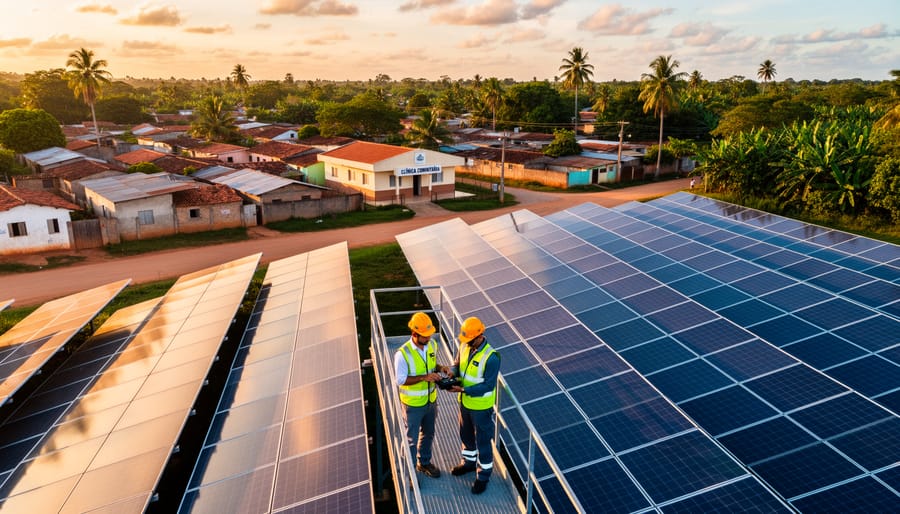
Brazil’s groundbreaking approach to betting regulation is illuminating a new path toward renewable energy funding. Through innovative legislation, revenue from regulated betting platforms like bwin bet apostas now flows directly into solar energy projects across underserved communities. This pioneering model demonstrates how governments can transform previously unregulated industries into powerful engines for climate action.
The mechanism is straightforward yet transformative: a portion of betting taxes funds solar installations in rural areas, indigenous territories, and low-income neighborhoods that have long waited for reliable electricity access. In just two years, this program has brought clean power to over 50,000 households while creating thousands of green jobs.
What makes this approach remarkable is its dual impact. Communities gain energy independence and economic opportunity, while Brazil accelerates toward its renewable energy targets. Small villages that once relied on diesel generators now operate schools and health clinics powered by sunlight. Local residents trained as solar technicians are building sustainable careers in their own regions.
This fusion of regulatory reform and environmental investment offers a replicable blueprint for nations worldwide seeking creative funding solutions for their climate commitments.
Brazil’s Betting Regulation: A New Era of Accountability
The Tax Structure Powering Change
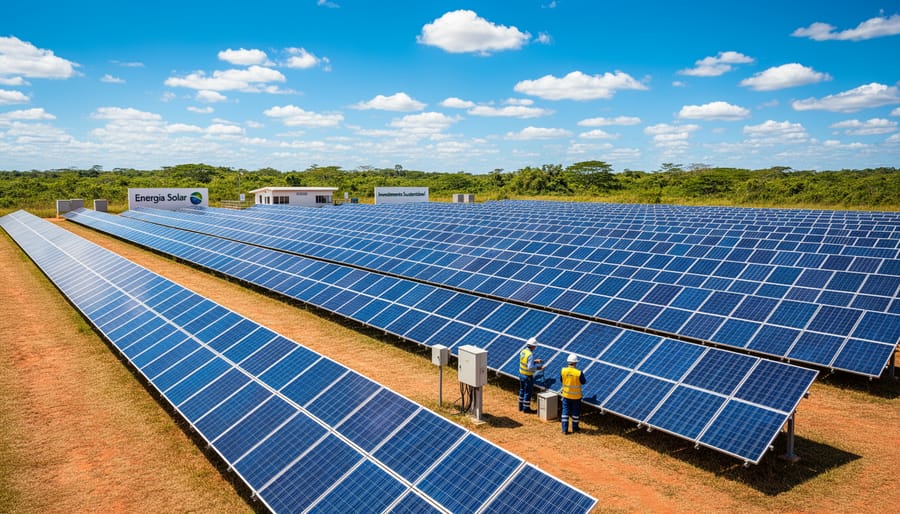
Brazil’s innovative approach to betting regulation creates a powerful funding stream for environmental progress through a thoughtfully designed tax structure. When the country formalized its sports betting market in 2018, lawmakers built in provisions that extend far beyond traditional gaming oversight.
The framework operates on a multi-tiered system. Licensed betting operators pay an 18% tax on gross gaming revenue, which flows into designated government accounts. From this substantial pool, 7.2% gets earmarked specifically for social and environmental initiatives, representing approximately 40% of total tax collections from the betting sector.
This allocation model transforms entertainment spending into community investment. State governments receive portions of these funds with guidelines encouraging renewable energy development, particularly solar installations in underserved regions. The beauty of this system lies in its predictability—communities can plan long-term solar projects knowing consistent funding streams will support them.
Consider the small town of Flores de Goiás, where betting tax revenues funded a community solar cooperative serving 150 families. Local leader Maria Santos explains, “We never imagined that something as distant as online betting could power our homes with sunshine. Now our children study under solar-powered lights, and we’re spending less on electricity bills.”
The transparency requirements built into this tax structure ensure accountability. Quarterly reports detail how funds move from betting operators to solar panels on community centers, schools, and health clinics. This clear pathway from regulation to renewable energy creates a replicable model that other nations are now studying carefully, demonstrating how creative policy-making can align economic activity with environmental goals.
From Bets to Brightness: How the Funding Flows
Who Benefits From This Funding Model
This groundbreaking funding model reaches far beyond Brazil’s major urban centers, directing solar energy resources to communities that have historically faced energy poverty and limited access to clean power solutions. Rural communities in the Northeast region, where sunshine is abundant but electricity infrastructure has lagged, are among the primary beneficiaries. Small municipalities in states like Bahia, Pernambuco, and Ceará are receiving solar installations that power schools, health clinics, and community centers, transforming daily life for thousands of families.
Indigenous communities also benefit significantly from this program. Solar panels now provide reliable electricity to remote villages previously dependent on diesel generators or lacking power altogether. This access enables children to study after dark, healthcare workers to refrigerate medicines, and families to connect with the broader world through communication technology.
Small and medium-sized businesses, particularly agricultural cooperatives and local manufacturers, receive solar installations that reduce operating costs and improve competitiveness. In one inspiring example, a women’s cooperative in rural Minas Gerais installed solar panels that now power their textile production facility, creating jobs while reducing their carbon footprint by 60 percent.
The program prioritizes equity through a transparent application process that awards points to projects serving low-income populations, vulnerable communities, and regions with limited renewable energy infrastructure. This intentional design ensures that betting revenues create lasting positive impact where it matters most, demonstrating how innovative policy can bridge the gap between environmental sustainability and social justice.
Solar Projects Taking Root Across Brazil
Community Spotlight: Rural Electrification Success
In the riverside community of Vila Esperança, located 180 kilometers from Manaus in the Amazon region, life transformed dramatically when solar panels arrived in March 2024. Before this intervention, the 87 families living along the Solimões River relied on expensive diesel generators that ran only four hours each evening, restricting refrigeration, communication, and educational opportunities.
Through funding generated by Brazil’s newly regulated betting sector, Vila Esperança became one of the first communities to receive a comprehensive solar microgrid system. The project installed 340 photovoltaic panels, creating a 120-kilowatt community energy hub that now provides 24-hour electricity to every household, the local school, and a newly established community cold storage facility.
The impact rippled through daily life in unexpected ways. Local fisherwoman Maria Santos now preserves her catch in refrigerated units, increasing her income by 60 percent while reducing waste. The community school extended hours into the evening, allowing adult literacy classes that serve 34 residents. Students access online educational resources for the first time, connecting them to opportunities beyond their remote location.
Perhaps most significantly, the reliable power enabled the community health post to maintain vaccine storage and operate essential medical equipment, eliminating dangerous eight-hour boat trips for basic care. Community leader João Silva reflects on the transformation: “We didn’t just gain electricity. We gained dignity, opportunity, and hope for our children’s future. This proves that sustainable development can reach everyone, not just cities.”

The Ripple Effect: Beyond Energy Generation
The transformation sparked by Brazilian betting revenues supporting solar energy extends far beyond the panels themselves, creating waves of positive change that touch every corner of society. This innovative funding model is proving that sustainable solutions can simultaneously address multiple challenges facing communities today.
Perhaps the most immediate impact comes through employment opportunities. As solar installations multiply across Brazil, thousands of new jobs are emerging in panel manufacturing, installation, maintenance, and project management. These positions offer stable income for families while building valuable technical skills. In rural communities particularly, solar job creation provides alternatives to traditional industries, empowering residents to participate in the clean energy revolution without leaving their hometowns.
Energy independence represents another powerful outcome. Communities that once relied on distant power grids now generate their own electricity, reducing vulnerability to outages and price fluctuations. Small businesses in remote areas report increased productivity with reliable power, while schools can now operate computers and cooling systems consistently. This self-sufficiency builds resilience and strengthens local economies.
The environmental benefits align directly with Brazil’s ambitious climate commitments. Each solar installation funded through betting revenues contributes to measurable carbon emission reductions, supporting the nation’s pledge to achieve carbon neutrality by 2050. This transition from fossil fuels accelerates as solar capacity grows, demonstrating that innovative financing can overcome traditional barriers to renewable energy adoption.
Success stories illuminate these impacts beautifully. In northeastern Brazil, a community center powered by betting-funded solar panels now offers evening literacy classes, made possible by reliable lighting. Another town reports that solar-powered water pumps have transformed agricultural productivity, allowing farmers to irrigate crops sustainably.
These interconnected benefits reveal how creative policy solutions can multiply positive outcomes, proving that environmental progress and community development naturally complement each other when supported by sustainable funding mechanisms.
Challenges and Growing Pains
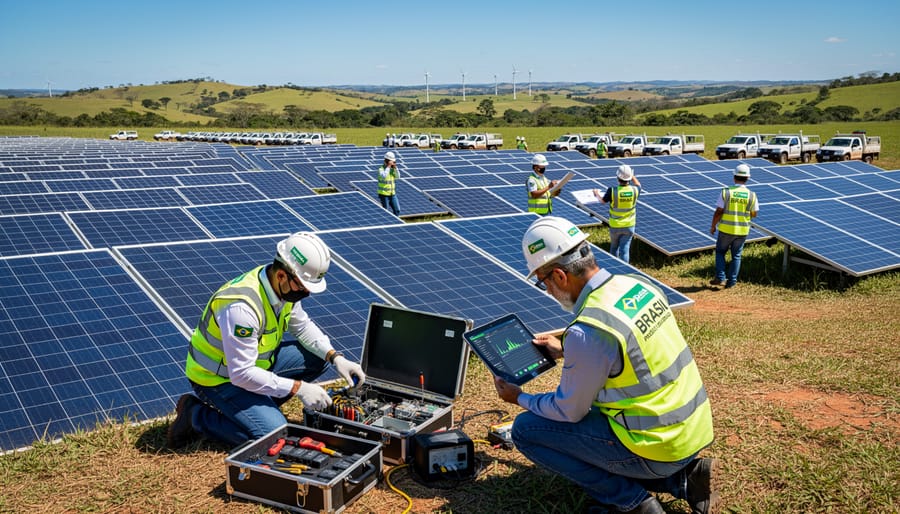
Like any pioneering initiative, channeling betting revenues into solar energy faces its share of growing pains. Bureaucratic processes initially slowed fund distribution in several states, with administrators learning to navigate the unique intersection of gaming regulation and renewable energy development. Some communities experienced delays in project approvals as multiple government agencies coordinated their oversight responsibilities.
However, these challenges have sparked creative solutions. In São Paulo, stakeholders established a streamlined application portal that reduced processing times by 60 percent. Community leaders and solar developers now participate in quarterly roundtable discussions with regulators, fostering transparency and identifying bottlenecks before they become barriers.
Financial literacy remains another area for growth. Many communities eligible for solar installations initially struggled to understand long-term benefits versus upfront costs. Grassroots organizations responded by launching educational workshops that translate complex financial projections into relatable terms, showing families exactly how solar panels translate into monthly savings.
Technical capacity building continues evolving too. Rural areas sometimes lacked experienced installers, prompting partnerships between urban solar companies and local vocational schools. These training programs create jobs while ensuring quality installations.
The most encouraging development is the collaborative spirit emerging from these challenges. Rather than viewing obstacles as failures, stakeholders treat them as opportunities for system refinement. Regular feedback loops between communities, developers, and regulators ensure the program adapts to real-world needs. This solutions-focused approach demonstrates that sustainable innovation requires patience, communication, and shared commitment to continuous improvement.
What This Means for Brazil’s Carbon Neutrality Goals
Brazil’s commitment to achieving carbon neutrality goals by 2050 receives a powerful boost through this innovative betting revenue funding mechanism. Early projections suggest that channeling just 2% of regulated betting revenues toward solar infrastructure could generate up to 5 gigawatts of clean energy capacity within the next decade, enough to power approximately 3 million homes while displacing nearly 8 million tons of CO2 emissions annually.
This funding model addresses one of the most significant barriers to achieving climate targets: financing. Traditional renewable energy projects often struggle to secure investment, particularly in underserved communities where impact could be greatest. By creating a predictable revenue stream from betting regulations, Brazil establishes a replicable framework that accelerates solar deployment without burdening taxpayers or depending solely on international climate finance.
Solar energy emerges as the natural centerpiece of Brazil’s decarbonization strategy, given the nation’s abundant sunshine and rapidly declining technology costs. The betting revenue approach makes large-scale solar farms financially viable while simultaneously supporting distributed rooftop installations in residential areas. This dual pathway ensures both grid-scale transformation and grassroots participation in the energy transition.
What makes this mechanism particularly promising is its scalability. As the regulated betting market matures, revenue contributions grow proportionally, creating expanding opportunities for solar investment. Communities in the northeastern state of Bahia have already witnessed this potential firsthand, where initial betting-funded solar installations now provide reliable electricity to 40 schools and health clinics, demonstrating how innovative financing transforms climate commitments into tangible progress.
This approach proves that creative policy solutions can bridge the gap between ambitious environmental targets and practical implementation, turning Brazil’s sustainability vision into achievable reality while inspiring similar innovations globally.
A Blueprint for the World
Brazil’s innovative approach to channeling betting revenues into solar energy has captured international attention, offering a compelling template for nations seeking creative pathways to fund their renewable energy transitions. Governments across Latin America, Africa, and Asia are studying this model, recognizing that traditional funding mechanisms often fall short of meeting ambitious climate targets.
The beauty of Brazil’s blueprint lies in its simplicity and adaptability. By redirecting resources from an existing revenue stream rather than creating new taxes or competing for limited public funds, the country has discovered a politically palatable solution. Uruguay and Colombia have already initiated conversations about similar solar-powered policy initiatives, exploring how regulated industries can contribute to environmental goals.
For policymakers worldwide, Brazil demonstrates that innovative thinking can unlock unexpected funding sources. The regulated betting sector represents just one possibility. Tourism levies, entertainment taxes, and digital services revenues could similarly support renewable infrastructure in different contexts.
Community educators and advocates play a vital role in championing these approaches. By sharing success stories from Brazilian villages and cities transformed by solar access, they can inspire local movements demanding similar action. The message is clear: sustainable energy transitions need not rely solely on conventional financing. When creativity meets political will, communities can access clean energy sooner than imagined.
The international community now has a proven model to adapt and improve upon, turning the challenge of climate action into an opportunity for inclusive, sustainable development that benefits everyone.
Brazil’s groundbreaking approach to channeling betting regulation revenues into solar energy projects demonstrates a powerful truth: innovative policy can transform unexpected resources into environmental progress. This model proves that sustainable energy futures aren’t built on wishful thinking alone, but through creative legislation that aligns economic activity with climate action.
The success stories emerging from communities across Brazil show what becomes possible when we reimagine funding mechanisms. Families gaining energy independence, schools reducing operational costs while teaching environmental stewardship, and local economies flourishing through green job creation—these aren’t distant dreams but present realities shaped by thoughtful policy.
This moment calls each of us to action. Speak with your local representatives about adopting similar revenue-redirecting models in your community. Support solar energy initiatives through advocacy, education, or direct investment. Share these stories with neighbors, colleagues, and decision-makers who can amplify their impact. Every conversation plants seeds for systemic change.
The path Brazil has charted offers more than a policy blueprint—it provides inspiration. It reminds us that progress comes from bold thinking and collaborative effort. When communities, governments, and individuals unite around shared environmental goals, remarkable transformation follows. The solar panels brightening Brazilian homes and businesses today reflect more than sunlight; they mirror the brilliance of human ingenuity applied to our planet’s most pressing challenge. Together, we’re building a cleaner, brighter energy future, one innovative policy and one inspired action at a time.